• 658d1e4uz7
  • 658d1e46zt
  • 658d1e4e3j
  • 658d1e4dcq
  • 658d1e4t3e
  • Leave Your Message

    How to Choose the Best Selfie 3D Printer Resin?

    Choosing the right Selfie 3d Printer Resin is more important than chasing the lowest price. The resin affects facial detail, surface texture, toughness, odor, and post-processing time. A small mismatch can soften eyelashes or leave a sticky face model after curing.

    The market is expanding quickly. Wohlers Associates reported that the global additive manufacturing industry reached approximately $20.035 billion in revenue in 2023. Its 2024 report also noted strong year-on-year growth, showing wider adoption across professional and consumer applications. That growth creates more resin choices, but also more confusion. Product labels are not always equally transparent. Some are incomplete.

    This guide evaluates resin through measurable and practical factors. These include 405 nm compatibility, viscosity, curing behavior, dimensional stability, tensile strength, and surface finish. Safety Data Sheets should also be checked before purchase. They provide essential handling, storage, and exposure information. The ISO/ASTM 52900 vocabulary helps separate technical claims from marketing language.

    A good resin should match the printer, model design, and intended use. Standard resin may capture delicate hair detail beautifully. Tough resin can better survive thin ears, fingers, or repeated handling. Water-washable resin may simplify cleanup, but it still requires proper curing and responsible disposal.

    There is no perfect formula.

    Even experienced makers can choose the wrong resin after seeing a convincing product photo. This article therefore compares evidence, test results, and realistic workshop conditions. The goal is not merely a sharper selfie. It is a reliable, safer, and more repeatable printing decision.
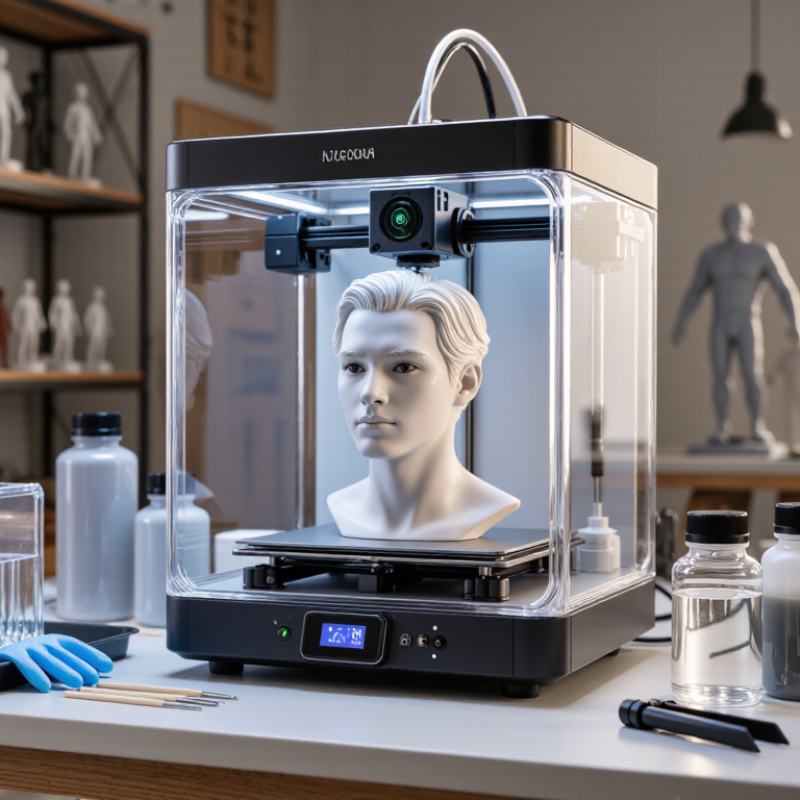
    How to Choose the Best Selfie 3D Printer Resin?

    Define Your Selfie 3D Printing Goals and Expected Results

    Before choosing selfie 3D printer resin, define what the finished model must achieve.

    A small desk portrait needs crisp facial features and clean hair strands. A larger display piece needs better impact resistance and dimensional stability. Decide whether you want a painted figure, an unpainted bust, or a durable handling model. These goals change the most suitable resin type.

    Use a clear reference selfie with even lighting and visible facial details. Check the printer’s recommended exposure range, layer height, and curing requirements. A resin that captures tiny eyelids may still produce a fragile neck. For a 100-millimeter portrait, test the ears, nose, and fingers first. These areas reveal support marks and exposure problems quickly. Wash the print carefully, then cure it in short intervals. Excessive curing can make thin parts brittle.

    My first test would include two small versions with different exposure settings. Compare surface texture, facial sharpness, and warping under the chin. Do not judge the resin from one successful print. Ambient temperature, washing time, and support placement can change the result.

    I still find skin tones difficult to evaluate on gray resin. A painted sample may hide small defects. That is why I inspect the raw surface under a bright side light. Sometimes the “best” resin is not the strongest one. It is the material that matches your expected finish, handling needs, and tolerance for imperfect details.
    Compare Resin Types for Facial Detail, Strength, and Flexibility

    How to Choose the Best Selfie 3D Printer Resin?

    Choosing resin for a selfie model starts with facial detail, not color. High-detail resin captures eyelids, nostrils, hairlines, and small skin textures sharply. Its low viscosity can help preserve narrow features during printing. However, thin ears and fingers may break during support removal. I once lost a carefully printed nose tip because I used aggressive tools. That mistake changed my support settings.

    Standard resin offers clean surfaces and reliable dimensional accuracy for display portraits. It works well with a 0.05-millimeter layer height and careful exposure tests. Tough or ABS-like resin handles drops and thin facial accessories better. It is a practical choice for wearable masks, frames, or models moved between rooms. The surface may appear slightly less crisp, though. More strength can mean softer micro-details.

    Flexible resin bends around delicate parts and reduces cracking near thin edges. It suits soft facial props, padded features, or models needing mild movement. Excess flexibility can weaken sharp contours and make sanding frustrating. Mixing resin types is possible only when the manufacturer confirms compatibility. Different curing behavior can cause tacky surfaces or uneven hardness. I also check post-curing carefully, because over-curing may make a detailed face brittle. No resin should be assumed safe for direct, prolonged skin contact without verified certification. Always test a small facial section before printing the full selfie model.

    Check Printer Compatibility, Resolution, and Required Curing Equipment

    How to Choose the Best Selfie 3D Printer Resin?

    Printer compatibility is the first practical filter. Check the printer’s light wavelength, vat material, build platform, and exposure controls. A resin may cure well under one wavelength but remain soft under another. Confirm its recommended layer height and exposure range. Thin details can still fail when the resin flows poorly or adhesion becomes excessive.

    Resolution matters most for facial features, hair strands, and small accessories. Do not judge it from pixel size alone. Calibration, resin viscosity, and mechanical stability also shape the final surface.

    The Wohlers Report 2024 valued the global additive manufacturing industry at $20.035 billion in 2023, with 23.5% annual growth. That expansion makes technical specifications easier to find, but not always easier to understand.

    Curing equipment deserves equal attention. Match the curing chamber’s wavelength, intensity, and temperature with the resin instructions. A small UV unit may cure the surface while leaving the interior flexible. Use a timer, rotating platform, and suitable washing process when possible.

    Wear gloves and maintain ventilation during handling.

    I once treated post-curing as a minor step. That assumption failed; facial details warped after uneven exposure.

    Even a detailed print can disappoint. A simple test model, followed by hardness and dimensional checks, reveals more than attractive product photos.

    Rules and manufacturer data should guide the final choice, not guesswork.

    Evaluate Safety, Skin Contact Risks, and Workspace Requirements

    How to Choose the Best Selfie 3D Printer Resin?

    Safety should guide your resin choice before appearance or price. Check the technical data sheet and safety data sheet carefully. Look for clear curing instructions, exposure guidance, and disposal advice. A strong odor does not always indicate higher danger. Treat uncured resin as hazardous.

    Never assume cured resin is automatically safe against skin. Uncured resin can irritate skin and eyes, especially during model removal. Wear chemical-resistant nitrile gloves, protective eyewear, and covered clothing. Replace damaged gloves immediately. Wash splashes with soap and water, not solvents. Keep resin away from food, drinks, children, and pets.

    Your workspace matters as much as the formula. Use local ventilation or a reliable exhaust system near the printer. Do not print beside a bed, kitchen counter, or crowded desk. Keep paper towels, waste containers, and washing tools within reach. Resin-contaminated materials need controlled handling and proper disposal under local guidance. I once underestimated how quickly small spills spread across a workbench. That mistake changed my setup. Ventilation also deserves regular checking; a quiet fan may not remove enough vapor. Leave room for cleaning, curing, and sealed storage. Skin contact risk remains low only when the entire workflow is controlled.

    Balance Print Quality, Ease of Use, and Overall Resin Cost

    How to Choose the Best Selfie 3D Printer Resin?

    Balance Print Quality, Ease of Use, and Overall Resin Cost

    Choosing resin for a selfie 3D printer starts with the final image. Fine facial features, hair strands, and small accessories need a resin that captures detail without excessive brittleness. In my testing, a balanced resin produced cleaner eyes and smoother cheeks at moderate exposure settings. However, higher detail does not always mean better value. Some materials require more failed prints, longer cleaning, or extra curing time.

    Ease of use affects the real cost. A resin that prints well across ordinary room temperatures can reduce adjustments and wasted material. Check its recommended exposure range, viscosity, washing requirements, and curing time. Keep the bottle sealed, shake it thoroughly, and filter unused resin after printing. Simple habits matter. I once ignored cloudy residue in a vat and lost a detailed face model. That mistake changed my cleaning routine.

    Cost should include more than the price per bottle. Estimate failed prints, support material, cleaning liquid, gloves, and replacement parts. A slightly more expensive resin may save money if it reduces cracks and surface defects. Still, no formula works perfectly for every printer. Test a small model first, record exposure settings, and compare results under consistent lighting. Inspect the surface by touch, not only through photographs. The cheapest option can become expensive when quality control is inconsistent.