Choosing the right 3D Color Printer in 2026 requires more than comparing resolution, price, or attractive sample models. A printed vase may look vivid under showroom lighting, yet show banding beside a window. Color accuracy, material compatibility, software control, maintenance, and production speed all affect the final result.
Industry evidence shows why this decision deserves careful attention. Wohlers Associates reported that the global additive manufacturing industry reached approximately $20.035 billion in 2023, growing 11.5% year over year in its Wohlers Report 2024. This expansion reflects wider professional adoption across product development, healthcare, education, and manufacturing. However, market growth does not guarantee consistent full-color output. Buyers should examine measurable performance, including color repeatability, dimensional accuracy, build volume, and operating costs.
Standards matter. ISO/ASTM 52900 provides common additive manufacturing terminology, while ASTM International committees continue developing guidance for process qualification and material performance. These frameworks improve comparison, but they do not replace hands-on testing. No single model wins. A design studio may prioritize CMYK or voxel-level color control, while a school may need safer operation and simple software. A service bureau may value throughput more than maximum color richness.
This guide evaluates the practical differences among major 3D Color Printer technologies. It also considers calibration routines, ink or material waste, support removal, workflow integration, and after-sales service. Some advertised specifications can be difficult to reproduce in real workplaces. That assumption is risky. Short test prints, supplier samples, and verified user feedback remain essential before making a 2026 investment.
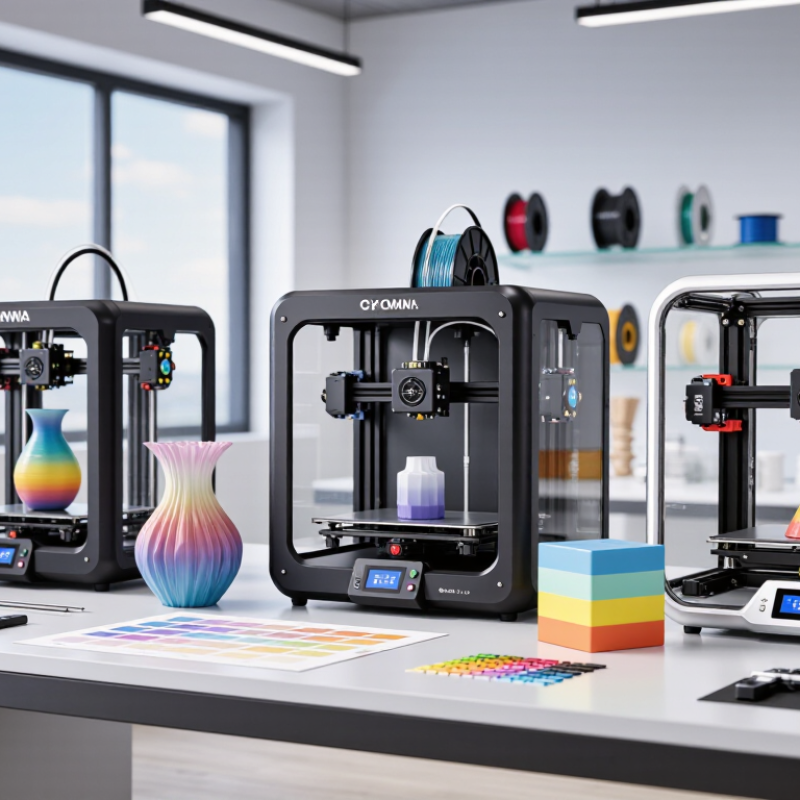
To choose the best 3D color printer in 2026, start by defining its color technology. Material jetting sprays tiny droplets of colored resin and cures them with light. It can produce smooth surfaces, sharp textures, and mixed colors in one build. This method suits display models, product samples, and detailed visual prototypes.
Binder jetting spreads colored powder and adds a liquid binder layer by layer. The parts usually have a natural, grainy texture and may need cleaning or sealing. It works well for architectural models and large visual pieces. Material extrusion, often using several colored filaments, is more affordable and easier to maintain. However, it usually creates visible layer lines, limited gradients, and color changes between toolpaths. The result can look less polished.
Other systems use resin vats with single-color or limited-color materials. They offer fine detail, but true full-color output may require painting after printing. That extra step affects labor, accuracy, and delivery time. No method is perfect. A useful test compares a small model containing skin tones, thin text, sharp corners, and a smooth color transition. Check the printed surface under ordinary indoor light. Color can shift after curing, polishing, or sealing. This is where many buying decisions become uncertain. Printer specifications help, but real samples reveal more. Consider material cost, calibration time, software control, ventilation, and operator skill before choosing.
2026 How to Choose the Best 3D Color Printer?
Color quality begins with the printing process, not the marketing label. Material-jetting systems can produce smooth gradients and fine color transitions. Powder-based systems often create vivid surfaces, but their texture may feel slightly grainy. Filament systems are practical for larger parts, though color changes can leave seams or visible bands. Ask for physical samples, not only polished website images. A blue model under warm room lighting may look completely different outdoors. Calibration matters. Small test swatches reveal this quickly.
Materials also define the printer’s useful range. Compare surface finish, strength, flexibility, and resistance to heat or moisture. A display model may need sharp color, while a functional prototype may need durable polymer. Some color methods work best with limited material choices. That trade-off is easy to overlook. I once selected a printer for attractive gradients, then found its material options unsuitable for a flexible enclosure. The result looked good but failed during fitting.
Print resolution needs more than one number. Check horizontal detail, layer height, color depth, and minimum feature size. Fine layer heights can improve curved surfaces, but they may increase printing time significantly. Higher color resolution does not always produce better visual detail if the model has poor geometry. Inspect text, thin walls, and skin-tone transitions in a controlled test file. Keep expectations realistic. Even excellent equipment can show slight color variation between batches, especially when calibration drifts or material ages.
| Color Printing Technology | Typical Color Quality | Typical Layer Height / Resolution | Compatible Materials | Color Range and Detail | Main Advantages | Main Limitations | Best Use Case |
|---|---|---|---|---|---|---|---|
| Single-Color Fused Filament Fabrication | Low to moderate; color depends on the selected filament | Approximately 0.08–0.30 mm layers; nozzle diameter commonly 0.25–0.80 mm | PLA, PETG, ABS, ASA, TPU, nylon, polycarbonate, and fiber-filled filaments with suitable hardware | One color per print or color change; good geometric detail but no automatic full-color blending | Lowest material cost; broad material availability; easy maintenance; strong functional parts | Limited color variation; visible layer lines; manual filament changes may increase print time | Functional prototypes, household parts, engineering models, and budget-conscious users |
| Multi-Material or Filament-Mixing FFF | Moderate to good; supports multiple solid colors and limited blending | Approximately 0.08–0.30 mm layers; color transitions are limited by nozzle size and purge behavior | Compatible thermoplastic filaments, provided the materials have suitable temperature and adhesion requirements | Several filament colors in one object; blended hues are possible on some systems but are less precise than professional color processes | Accessible multi-color workflow; durable thermoplastics; suitable for larger parts | Material purging creates waste; color changes can increase print time; cross-contamination may affect color accuracy | Educational models, product mock-ups, signs, toys, and multi-color prototypes |
| Material Jetting | Very high; supports detailed full-color models and smooth tonal transitions | Commonly about 0.014–0.028 mm layers; fine droplets provide high in-plane detail | Photopolymer model materials, transparent materials, flexible materials, and soluble support materials | Wide color gamut, fine textures, small text, gradients, and realistic surface appearance | Excellent surface quality; highly detailed color output; multiple material properties in one build | High equipment and material cost; photopolymers may age or become brittle; post-processing is required | Medical, consumer-product, animation, character, jewelry, and presentation-grade prototypes |
| Color Binder Jetting | High for visual models; generally less durable and less saturated than painted or resin-based parts | Typically about 0.10–0.15 mm layers; print resolution is often specified in the hundreds of dpi | Gypsum-based or mineral powders with liquid binders; finishing infiltrants may be used | Full-color surfaces, textures, maps, and architectural details; color may appear slightly muted | Fast production of full-color models; no support structures are normally required in the powder bed | Parts are comparatively fragile before finishing; powder handling and infiltration add post-processing steps | Architectural models, geographic models, figurines, educational displays, and visual concept models |
| Color-Capable Resin Photopolymerization | Moderate to high; color is usually added through material mixing, specialized resin systems, or post-print finishing | Approximately 0.025–0.10 mm layers; XY detail commonly ranges from about 35–100 micrometers | Standard, tough, flexible, castable, dental, engineering, and specialty photopolymer resins | Very smooth surfaces and fine details; native full-color blending is less common than in material jetting | Excellent small-feature accuracy; smooth surfaces; useful for miniatures and detailed prototypes | Resin handling requires care; washing and UV curing are necessary; many parts need painting for final color | Miniatures, dental models, jewelry patterns, intricate prototypes, and small decorative objects |
| Powder Bed Fusion Without Integrated Color | Low for direct color printing; parts normally require painting, dyeing, or another finishing process | Commonly about 0.06–0.15 mm layers, depending on the process and material | Nylon, polypropylene, TPU, metal powders, and other qualified powder materials | Strong functional geometry and good detail, but the printed surface is generally monochrome | Strong, complex parts; efficient nesting; little or no dedicated support structure for many powder processes | Not a direct full-color solution; powder systems require specialized equipment and finishing workflows | End-use engineering parts where mechanical performance is more important than printed color |
Choosing a 3D color printer in 2026 starts with workflow, not a colorful specification sheet. A practical test often exposes misleading speed claims. Color changes, purge cycles, and cooling pauses consume real time. A printer rated at 300 mm/s may finish a multicolor model slowly. Measure completed parts per hour instead.
The 2024 Wohlers Report valued the global additive manufacturing industry at $20.035 billion in 2023, up 13.5% year over year.
That growth increases demand for dependable throughput.
Compare speed using the same 150-gram, three-color model. Keep layer height, infill, and support settings identical. Record total time, failed prints, and material waste.
Keep it empirical.
Build volume matters for wide, tall, or batch-produced parts.
A 250 × 250 × 250 mm space may suit prototypes, but it can restrict helmets or grouped fixtures.
Larger volume is not automatically better. It may increase heating time, leveling demands, and enclosure size.
Leave around 10 mm of clearance around your largest planned part.
Look for automatic bed checks, clear alerts, simple color mapping, and accessible cleaning points.
Test the slicer with a small cube first.
ISO/ASTM 52900 standardizes additive manufacturing terms, but it cannot guarantee an intuitive workflow.
That distinction matters.
Score setup minutes, interventions per print, and recovery after a filament jam.
My judgment might change after a month of maintenance. Convenience is measurable, but never perfectly.
2026 How to Choose the Best 3D Color Printer?
Assess Software, Maintenance, Safety, and Operating Costs
Begin with the software, not the color count. A strong workflow should import common 3D files, map colors accurately, and flag thin walls before printing. Look for clear controls, repeatable profiles, and useful error messages. A reliable interface saves time. Test the same model twice and compare the results.
Maintenance affects every week of ownership. Check how often print heads, filters, trays, and calibration parts need attention. Ask whether routine cleaning requires special tools or trained technicians. I prefer systems with written procedures and accessible service records. However, advertised maintenance times may seem optimistic. Leave room for failed prints and unexpected repairs.
Safety deserves practical attention. Review ventilation needs, heat sources, moving parts, electrical protection, and waste handling instructions. Keep safety data sheets nearby when materials require them. Operating costs include software fees, color materials, energy, labor, cleaning supplies, and post-processing. Track these costs during a small trial run. One calculation often misses staff time. A cheaper printer can become expensive when calibration is frequent or color accuracy is inconsistent. Use documented test files, independent user evidence, and local safety requirements before making the final decision.
Assess software, maintenance, safety, and operating costs before making a purchase.
This 100-point procurement model gives the greatest weight to total operating cost and workflow software, while maintenance, safety, and output quality remain essential decision factors. Use the scores as a practical starting point and adjust them according to production volume, operator skill, material requirements, and local safety regulations.
Choosing the best 3D color printer in 2026 starts with your project, not the highest specification. Define the output first: architectural models, product prototypes, classroom objects, or short-run parts. Each application needs different color accuracy, layer detail, material compatibility, and production speed. A full-color display model may need smooth gradients. A functional prototype may value strength over perfect color.
Budget includes more than the purchase price. Estimate cartridges, cleaning materials, software, maintenance, failed prints, and operator time. The 2024 Wohlers Report valued the global additive manufacturing industry at $20.035 billion in 2023, after 13.5% growth. That expansion increases choice, but it also makes comparisons harder. Ask for sample files and inspect small text, skin tones, flat surfaces, and moving joints. Test before committing.
Look for published color-management procedures, repeatability data, and service availability. ASTM International’s additive manufacturing guidance also stresses process control and documented qualification, which matter in professional workflows. A lower-cost machine can fit occasional use, while a higher-throughput system may reduce labor costs for regular production. Do not trust resolution alone. My imperfect assumption was that more colors always meant better results. In practice, calibration and material selection often matter more. Leave room for mistakes.