Top 10 Resins for 3D Printers for Global Buyers
As 3D printing technology advances, the choice of resin for 3D printers becomes increasingly crucial. Quality resin influences the final product's strength, detail, and appearance. Many brands offer various types of resin, making the selection process daunting for buyers worldwide.
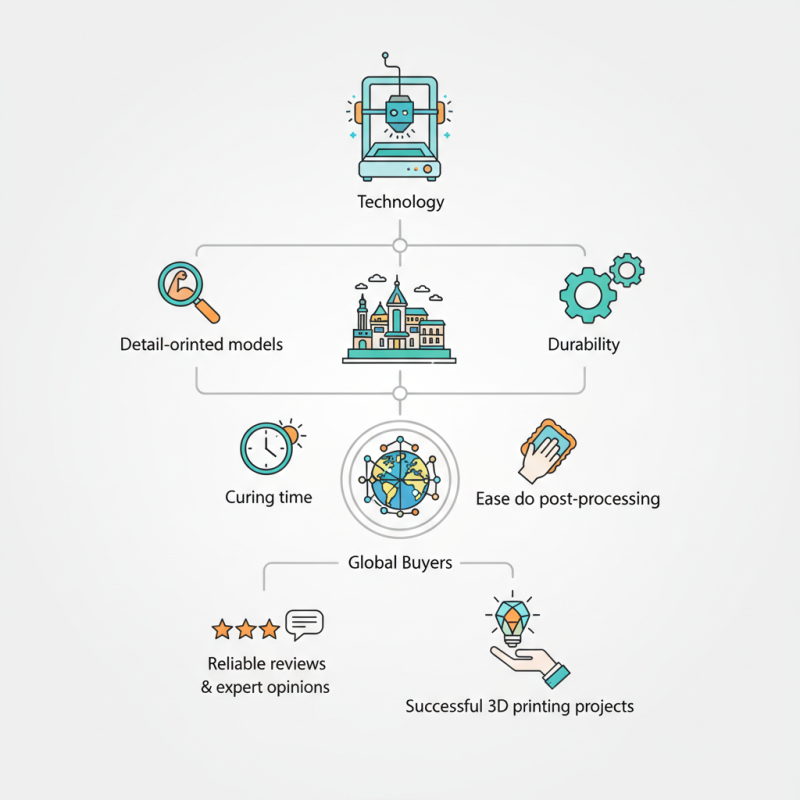
Understanding the specific needs of your project is essential. For example, some resins cater to detailed models, while others focus on durability. Factors like curing time and ease of post-processing also play a significant role. A wrong choice can lead to dissatisfaction and wasted resources.
Global buyers must navigate a complex landscape of available options. Preferences can vary widely based on regional technology and material availability. Engaging with reliable reviews and expert opinions is vital. This ensures informed decisions that lead to successful 3D printing projects. The right resin for 3D printers can transform ideas into reality.
Overview of 3D Printing Resins Available in the Global Market
The global 3D printing resin market is evolving rapidly. According to recent market analysis, the demand for high-performance resins is expected to grow at a compound annual growth rate (CAGR) of 27.2% from 2022 to 2030. This indicates a significant shift in the preferences of manufacturers and hobbyists alike.
Various types of resins are now available, each tailored to specific applications. Standard resins are popular for prototyping due to their affordability and easy handling. However, specialized resins, like tough or flexible variants, are gaining traction for their superior mechanical properties. Data shows that tough resins can withstand higher impacts, making them suitable for functional parts.
Despite the growth, there are challenges. Not all resins are compatible with every printer, leading to potential waste and inefficiencies. Inexperienced users may struggle to choose the right resin for their needs, which can result in suboptimal printing outcomes. There’s also a growing concern regarding the environmental impact of resins. Evaluation of lifecycle assessments is essential for sustainability in this industry.
Criteria for Selecting the Best 3D Printing Resins
Choosing the right 3D printing resin can significantly impact the quality of your final product. When assessing resins, consider the hardness and flexibility required for your project. Some applications benefit from rigid materials, while others may need softer, more pliable options. Pay attention to the curing time, as this can affect your workflow. Fast-curing resins can speed up production, but they may compromise detail.
Another critical factor is the resin’s temperature resistance. Some projects require parts that can withstand higher temperatures. Ensure the resin chosen is suitable for such conditions. Environmental factors are also essential. For instance, some resins may emit unpleasant odors during printing. Researching safety data sheets (SDS) can provide insights into toxicity levels and safety precautions.
Additionally, think about the print resolution and detail required for your models. A resin that offers high detail might be necessary for intricate designs, while other projects may tolerate a lower resolution. Balancing these aspects can be challenging. Always test your selected resin in small batches before committing to larger prints.
Emphasis on practical experience often reveals issues not covered in specifications. Be open to reflections based on your printing outcomes.
Top 10 3D Printing Resins for Various Applications
3D printing resins come in various formulations, catering to different needs. Some are designed for fine detail, while others focus on strength. Choosing the right resin is essential for achieving desired results.
For instance, photopolymer resins provide excellent accuracy, making them ideal for intricate designs. These resins cure under UV light, resulting in a hard finish. However, they can be brittle, which may limit their application in functional parts.
On the other hand, flexible resins are gaining popularity. They allow for the creation of parts that can bend without breaking. This characteristic is crucial for prototyping items that require elasticity. Yet, they often lack the durability needed for long-term use. Balancing these qualities can be challenging, and buyers should carefully consider their specific applications.
Top 10 3D Printing Resins for Various Applications
This chart displays the top 10 3D printing resins based on their popularity and applications in various industries.
Comparative Analysis of Resin Properties and Performance
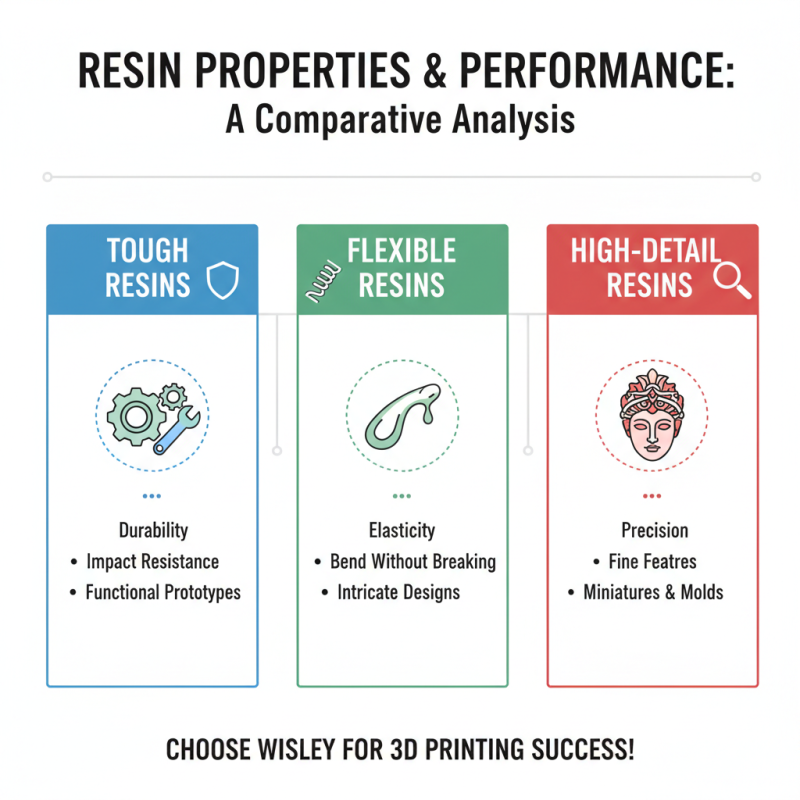
When selecting resins for 3D printing, understanding their unique properties is crucial. Various resins exhibit different performance characteristics. Some resins offer superior durability, while others prioritize flexibility or high-definition detail. For instance, tough resins can withstand impact, making them suitable for functional prototypes. In contrast, flexible resins allow for intricate designs that can bend without breaking.
Tips for choosing resins: Check the curing time. Fast-curing resins speed up production. Ensure the resin meets your project's requirements. Not all resins are created equal, and their behavior can differ dramatically in various applications. A resin that performs excellently in one context may fail in another, highlighting the need for thorough testing.
Moreover, temperature resistance is another key factor. Some resins degrade rapidly under heat. This can compromise the integrity of printed models when exposed to high-temperature environments. Think about what your final print will endure. Choosing the right resin requires weighing its strengths against potential weaknesses. Each application may reveal different aspects of a resin's performance. Reflecting on these factors can help you make a more informed decision.
Future Trends in 3D Printing Resin Technology
The landscape of 3D printing resin technology is rapidly evolving. As more industries adopt this technology, several key trends are emerging. One significant trend is the push towards eco-friendly resins. Manufacturers are exploring bio-based materials that reduce environmental impact. This is vital as sustainability becomes a priority for consumers.
Another noteworthy trend is the development of high-speed printing resins. These materials allow for faster production times without sacrificing quality. Printing speed is crucial for applications that require rapid prototyping or large-scale production runs. However, achieving a balance between speed and detail can be challenging, requiring ongoing research and innovation.
As we look towards the future, the integration of smart materials is also gaining traction. These smart resins possess unique properties, such as self-healing capabilities or color-changing features. The potential applications are thrilling yet daunting. It raises questions about durability, performance, and safety. The path forward in resin technology promises to be exciting but demands careful consideration and thoughtful development.