Top 5 Dental 3D Printers for Accurate and Efficient Production?
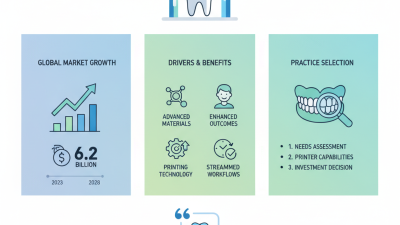
The dental industry is rapidly evolving, with innovative technologies transforming traditional practices. A significant force behind this change is the Dental 3D Printer. According to a recent report by MarketsandMarkets, the dental 3D printing market is projected to reach $6.5 billion by 2025, growing at a CAGR of 28.1%. This growth highlights the increasing reliance on 3D printing technology for producing dental solutions.
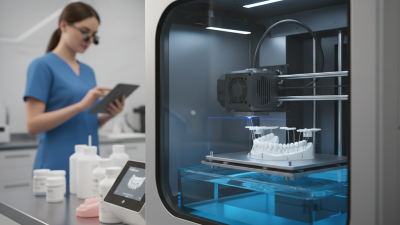
Dental 3D Printers offer accuracy and efficiency, making them essential in modern dentistry. They enable the production of crowns, dentures, and aligners with remarkable precision. However, not all printers are created equal. Various models serve different needs, from small clinics to larger dental laboratories. The quality of the output can vary significantly based on the printer used.
As practitioners adopt these technologies, challenges remain. For example, training staff to use advanced printers can be daunting. Moreover, ensuring consistent quality in printed models still poses a risk. Identifying the right Dental 3D Printer is crucial for achieving the best outcomes. This article explores the top five options available today, focusing on their features and benefits.
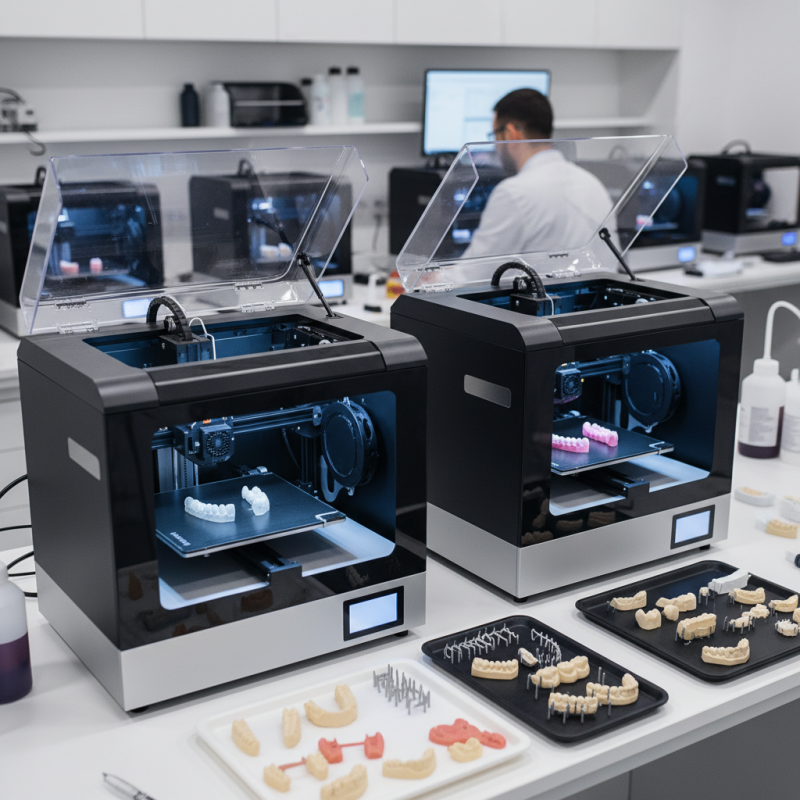
Overview of Dental 3D Printing Technology and its Advantages
Dental 3D printing technology has revolutionized how dental products are created. This technology allows for faster production and remarkable precision. A recent industry report indicates that dental 3D printing is growing at a compound annual growth rate (CAGR) of 23.2%, reflecting its rising importance in the dental sector.
The primary advantage of this technology is the high level of accuracy it offers. For example, it can produce dental models with an error margin as low as 0.1 mm. This precision is crucial for custom fittings and surgical guides, enhancing overall patient outcomes. Moreover, 3D printing significantly reduces waste compared to traditional methods. Studies show that traditional processes can waste up to 30% of materials, whereas 3D printing minimizes this waste to just 10% or less.
However, the adoption of dental 3D printing isn't without challenges. Not all practices have the resources to invest in high-quality printing equipment. The learning curve for dentists and technicians can be steep, as mastering the software requires training and time. Many professionals grapple with integrating this new technology into existing workflows. This friction can hinder full adoption, despite clear benefits.
Key Features to Consider When Choosing a Dental 3D Printer
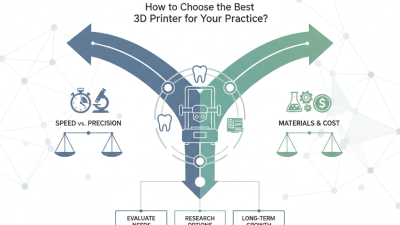
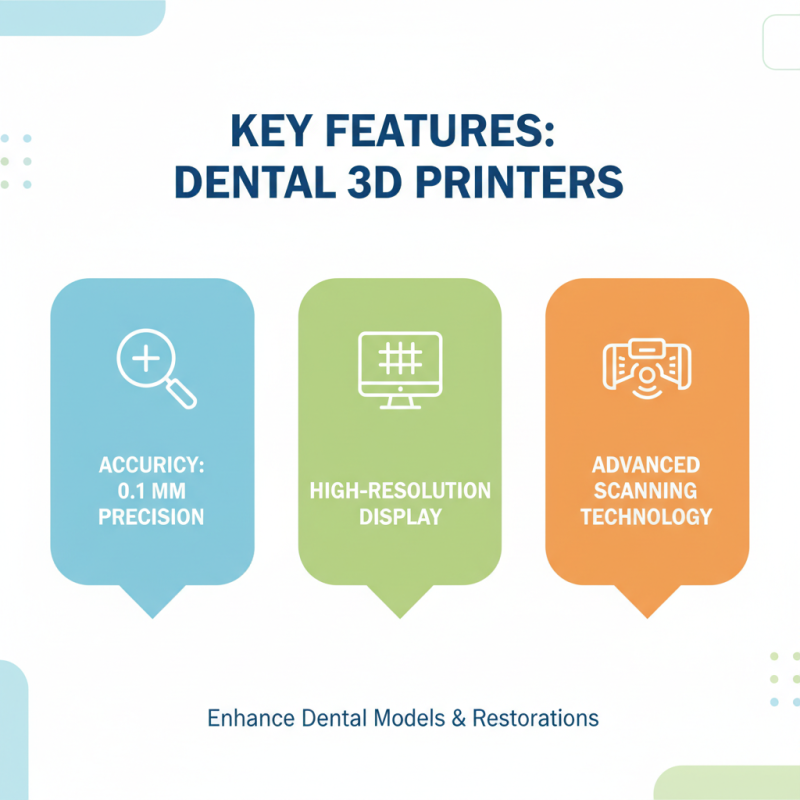
When selecting a dental 3D printer, several key features must be evaluated. Accuracy is paramount. According to industry reports, a precision of 0.1 mm can significantly enhance the quality of dental models and restorations. Look for printers equipped with high-resolution displays and advanced scanning technologies.
Material compatibility is also crucial. Many dental applications require specific resins or filaments. A study indicated that printers with versatile material options tend to produce better results for both functional and aesthetic applications. Evaluate the printer's ability to handle different materials for varying tasks, from crowns to aligners.
Speed can’t be overlooked. Professionals often need to fulfill tight deadlines. Data shows that a printer’s build speed impacts overall workflow efficiency. If a printer can produce models rapidly without sacrificing quality, it can greatly enhance productivity. In a field where time is money, faster production timelines can be a game changer. However, it’s essential to balance speed with quality, as rushed prints may lead to imperfections that require rework.
Top 5 Dental 3D Printers: Detailed Reviews and Specifications
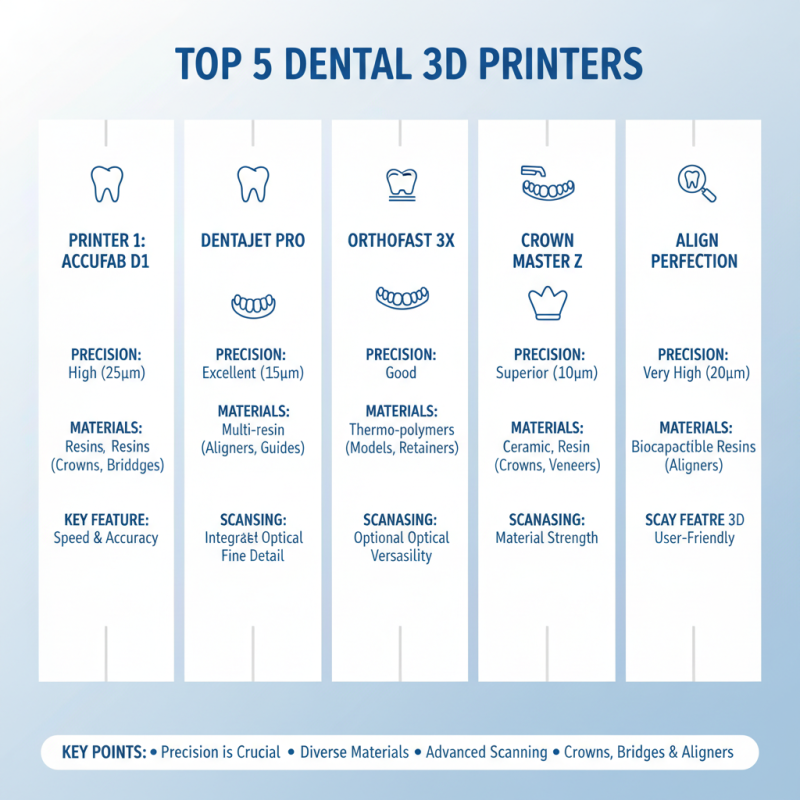
In the world of dental technology, precision is crucial. The top dental 3D printers excel in producing intricate dental models. These printers can create crowns, bridges, and aligners with remarkable accuracy. Many models have advanced scanning capabilities, enhancing their performance. A printer’s material compatibility also plays a vital role in its effectiveness. Some use special resins, while others may work with various types of materials.
However, it is important to consider potential limitations. Not every printer designs work seamlessly with every dental software. This can lead to inefficiencies during production runs. Additionally, the cost of maintenance can be significant, affecting long-term investment decisions. Some users may find the learning curve steep. It’s essential to gauge whether the investment aligns with expected production volume. The choice of printer should reflect not just features but also practical usability within the dental practice.
Investing in a dental 3D printer requires careful consideration. Understanding what is needed most in terms of functionality and simplicity can help. Not all printers offer the same level of mechanical reliability. A printer that seems perfect on paper may not perform well in real-world scenarios. Each practice must evaluate its unique needs when selecting the right equipment.
Comparative Analysis of Cost-Effectiveness in Dental 3D Printers
The dental industry is experiencing a transformation due to 3D printing technology. A comparative analysis of cost-effectiveness reveals significant insights into production efficiency. According to a recent report by SmarTech Analysis, dental 3D printing can reduce prototyping costs by up to 50%. This drastic decrease is essential for dental practices aiming to boost profitability.
However, upfront costs for high-quality printers can be daunting. Some estimates suggest that initial investments range from $20,000 to over $100,000. Practices must assess their long-term needs versus immediate financial capability. A well-equipped printer may lead to better patient outcomes but requires a careful cost-benefit analysis.
Moreover, the speed of production enhances turnaround times for dental restorations. Many printers complete jobs within hours compared to traditional methods, which can take days. Still, the learning curve associated with these printers cannot be overlooked. Training staff and integrating new technology into existing workflows presents challenges. Balancing these factors is crucial for sustainable practice growth.
Top 5 Dental 3D Printers for Accurate and Efficient Production
| Printer Model |
Build Volume (mm) |
Layer Thickness (μm) |
Print Speed (mm/hr) |
Material Compatibility |
Price (USD) |
| Model A |
120 x 120 x 120 |
50 |
40 |
Resin, PLA |
3,500 |
| Model B |
150 x 150 x 150 |
25 |
50 |
Resin, Nylon |
4,200 |
| Model C |
100 x 100 x 100 |
75 |
30 |
Resin |
2,700 |
| Model D |
130 x 130 x 130 |
60 |
45 |
Resin, Flexible |
5,000 |
| Model E |
160 x 160 x 160 |
40 |
35 |
Resin, Carbon Fiber |
6,000 |
Future Trends in Dental 3D Printing Technology and Applications
The landscape of dental 3D printing is rapidly evolving. Innovations in materials are paving the way for more precise prosthetics and orthodontics. Recently, biocompatible resins have gained traction due to their durability and safety. These materials allow for the production of dental devices that not only fit better but also last longer. The prospect of using 3D-printed scaffolds in regenerative dentistry offers exciting possibilities.
Moreover, integrating artificial intelligence with 3D printing streamlines workflows. This combination reduces errors in design and fabrication. However, reliance on technology poses challenges. The need for skilled technicians who can manage these advanced systems remains crucial. Training programs must evolve to meet this demand.
The future may also see an increase in in-office 3D printing capabilities. Patients could receive custom fittings in a single visit. Yet, not all clinicians are ready for this shift. Understanding the technology is fundamental for successful implementation. As the dental field embraces these advancements, ongoing research is essential to address existing limitations and ensure reliability.
Top 5 Dental 3D Printers for Accurate and Efficient Production