Why Choose a Metal 3D Printer for Your Manufacturing Needs?
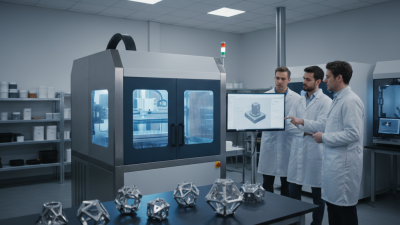
In today's rapidly evolving manufacturing landscape, the adoption of a Metal 3D Printer is becoming increasingly essential. Experts recognize its transformative potential. Dr. Emily Chen, a leading authority in additive manufacturing, states, "Metal 3D printing reshapes the future of design and production." This technology enables manufacturers to create intricate designs that were once impossible with traditional methods.
The rapid advancements in Metal 3D Printer technology have led to significant improvements in efficiency and material usage. Businesses can now produce lightweight, strong components tailored to specific needs. However, the integration of such advanced equipment does present challenges. Companies must consider costs and training for their teams.
Investing in a Metal 3D Printer can provide a competitive edge, but it requires careful planning. An understanding of the nuances in metal materials and printing processes is crucial. As companies navigate this journey, exploring the true benefits of Metal 3D Printers can lead to groundbreaking innovations and advancements in the manufacturing sector.
Advantages of Metal 3D Printing Over Traditional Manufacturing Methods
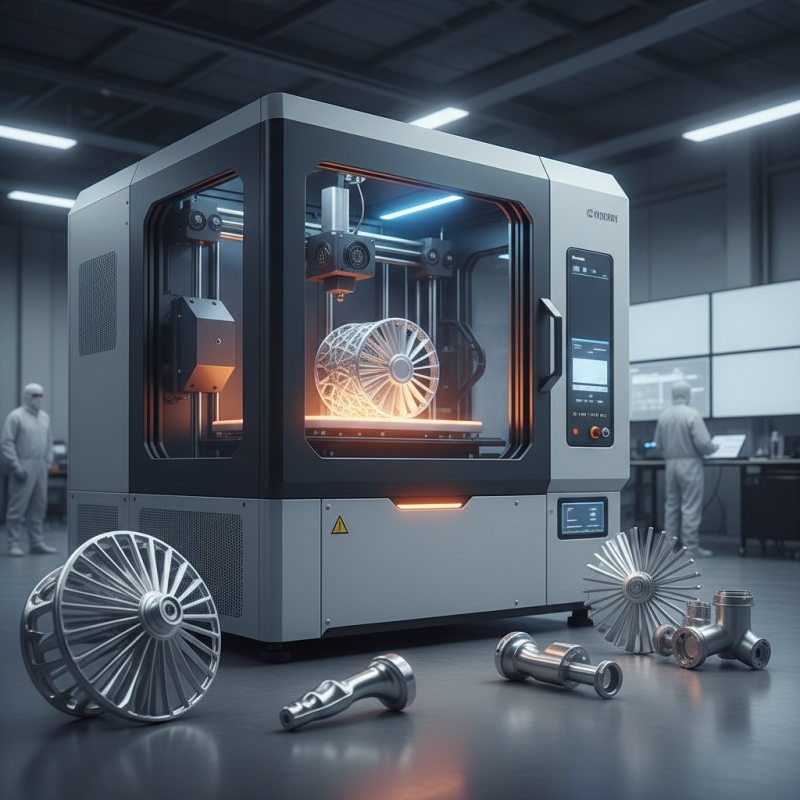
Metal 3D printing offers distinct advantages when compared to traditional manufacturing methods. One major benefit is design flexibility. Complex geometries that were once challenging or impossible to achieve with conventional methods can now be realized with ease. This leads to innovative products that can enhance performance and minimize weight.
Speed is another significant advantage. Metal 3D printing can drastically reduce lead times. Parts can be produced directly from CAD designs without the need for extensive tooling or setups. However, this speed may come with some challenges. The initial investment in technology and training can be substantial, and not all applications might justify the cost.
Additionally, metal 3D printing can optimize material usage. Traditional methods often waste valuable resources through machining or cutting. In contrast, additive manufacturing uses only the necessary amount of material. Despite these benefits, the technology is still evolving. Ongoing research is necessary to improve the quality and consistency of the final products. Embracing metal 3D printing involves a nuanced understanding of its potential and limitations.
Key Applications of Metal 3D Printing in Various Industries
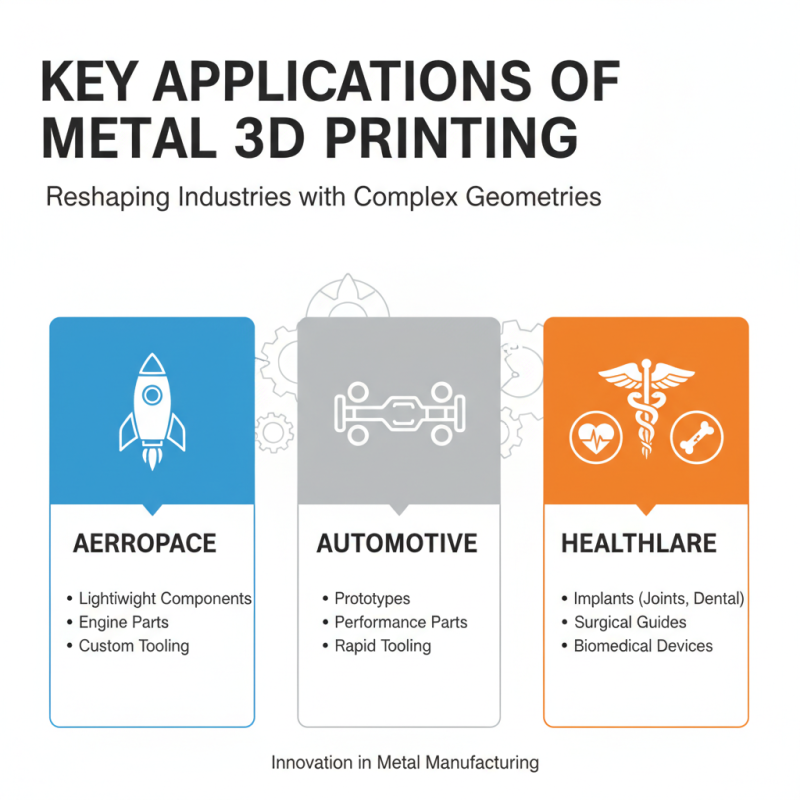
Metal 3D printing is reshaping various industries. This technology excels in producing complex geometries. Aerospace, automotive, and healthcare are primary sectors benefiting from it.
In aerospace, metal 3D printers create lightweight components. These parts reduce fuel consumption in aircraft. The ability to produce intricate designs leads to improved performance. However, challenges exist in meeting strict safety standards. Every part must undergo rigorous testing and certification processes.
The automotive industry also sees advantages. Manufacturers use metal printing for prototyping and tooling. This speeds up the production cycle significantly. Yet, there are issues with material consistency. Variations can affect the quality and durability of parts. In healthcare, custom implants and surgical tools are being produced. This personalization increases patient outcomes. However, the regulatory landscape can slow adoption. Balancing innovation with compliance remains a key focus.
Factors to Consider When Choosing a Metal 3D Printer
When selecting a metal 3D printer, several critical factors come into play. One key consideration is material compatibility. Different printers handle various metal alloys, such as titanium and aluminum. According to a recent industry report, over 36% of manufacturers prioritize material versatility in their purchasing decisions. This reflects the growing need for printers that can accommodate diverse applications.
Another factor is the printer's build size and layer resolution. A study from the Additive Manufacturing Association indicates that 58% of advanced manufacturers require larger build volumes for complex parts. Layer resolution affects detail and finish quality. Printers with finer resolution capabilities can produce intricate designs, essential in sectors like aerospace or medical devices.
Additionally, the technology used in the printer significantly influences performance. Selective laser melting and electron beam melting are popular techniques. Each has advantages and limitations. Sourcing the right technology demands thorough research and expert consultation. Many companies face challenges in navigating these options, leading to potential missteps. Careful consideration of these factors ensures that businesses choose a printer that aligns with their specific production needs and long-term goals.
The Role of Materials in Metal 3D Printing Technology
Metal 3D printing has revolutionized manufacturing. At the heart of this technology is the choice of materials. The right materials determine the strength, durability, and overall quality of the final product. Common materials include stainless steel, titanium, and aluminum alloys. Each has unique properties that make them suitable for specific applications.
Understanding how these materials behave during the printing process is crucial. For instance, stainless steel offers excellent corrosion resistance. However, it can be challenging to print due to its thermal properties. On the other hand, titanium provides high strength-to-weight ratios, making it popular in aerospace and medical industries. Yet, it is more expensive and can require specialized handling techniques.
Material selection requires careful consideration. Factors like the intended application, cost, and mechanical properties play a role. Too often, manufacturers overlook these details, leading to subpar results. Engaging with experts can help identify the most effective material for a project, ultimately enhancing product performance.
Why Choose a Metal 3D Printer for Your Manufacturing Needs?
This chart illustrates the typical material costs associated with different metals used in 3D printing. Choosing the right material is crucial for optimizing performance and cost in your manufacturing projects.
Future Trends in Metal 3D Printing for Manufacturing Efficiency
Metal 3D printing is revolutionizing manufacturing. This technology offers enhanced precision and flexibility. As industries evolve, the need for efficient production methods grows. Metal 3D printers accommodate these demands by enabling the creation of complex geometries with minimal waste. Traditional manufacturing often leads to excess material use. In contrast, metal additive manufacturing optimizes resources, providing an eco-friendly alternative.
Future trends highlight automation in metal 3D printing. By integrating AI and machine learning, these printers can refine processes continually. This adaptation enhances speed and reduces costs. However, reliance on technology poses challenges. Technical errors can occur, leading to potential disruptions. Manufacturers must balance automation benefits with the risks involved.
Ongoing research focuses on improving metal materials and processes. The development of new alloys could broaden application possibilities. Yet, materials quality varies significantly, requiring thorough testing. As the market matures, understanding the full capabilities and limitations of metal 3D printing becomes essential. Embracing this technology is a step toward manufacturing efficiency, but constant evaluation remains crucial.
Why Choose a Metal 3D Printer for Your Manufacturing Needs? - Future Trends in Metal 3D Printing for Manufacturing Efficiency
| Feature |
Description |
Advantages |
Future Trends |
| Material Variety |
Ability to work with various metal materials, including titanium and aluminum. |
Enhanced design flexibility and performance. |
Growing range of alloys and composites being developed. |
| Speed |
Rapid prototyping capabilities compared to traditional manufacturing. |
Shorter lead times and quicker time to market. |
Continuous improvements in printing speeds. |
| Cost Efficiency |
Reduction in material waste and overall manufacturing costs. |
Lower production costs for small batches and complex geometries. |
Advancements in machines leading to reduced operational costs. |
| Customization |
Easily create customized parts without extensive retooling. |
On-demand manufacturing tailored to specific customer needs. |
Increased demand for personalized products boosting market growth. |
| Complex Geometries |
Capable of producing intricate designs that are difficult with traditional methods. |
Ability to innovate and create lightweight structures. |
Research into new printing techniques to enhance complexity capabilities. |