What is a Castable Resin 3D Printer for Jewelry and How Does It Work?
The use of a Castable Resin 3D Printer for Jewelry is revolutionizing the jewelry-making industry. This innovative technology allows artists and designers to create intricate and detailed pieces with precision. The printer utilizes resin that can be cast into metal, bridging the gap between digital design and physical execution.
Imagine producing complex designs that were once impossible with traditional methods. Jewelry makers can now experiment freely, pushing creative boundaries. However, working with resin can be challenging at times. The prints require careful handling, and not every design translates perfectly into a final piece. This process often invites revisions and learning from imperfections.
Still, the advantages are undeniable. A Castable Resin 3D Printer for Jewelry empowers creators with more control and efficiency. As technology evolves, so does the potential for unique and personalized adornments. Each piece tells a story, capturing the essence of craftsmanship in a modern context. However, artists must remain vigilant about the nuances of their materials and techniques for optimal results.
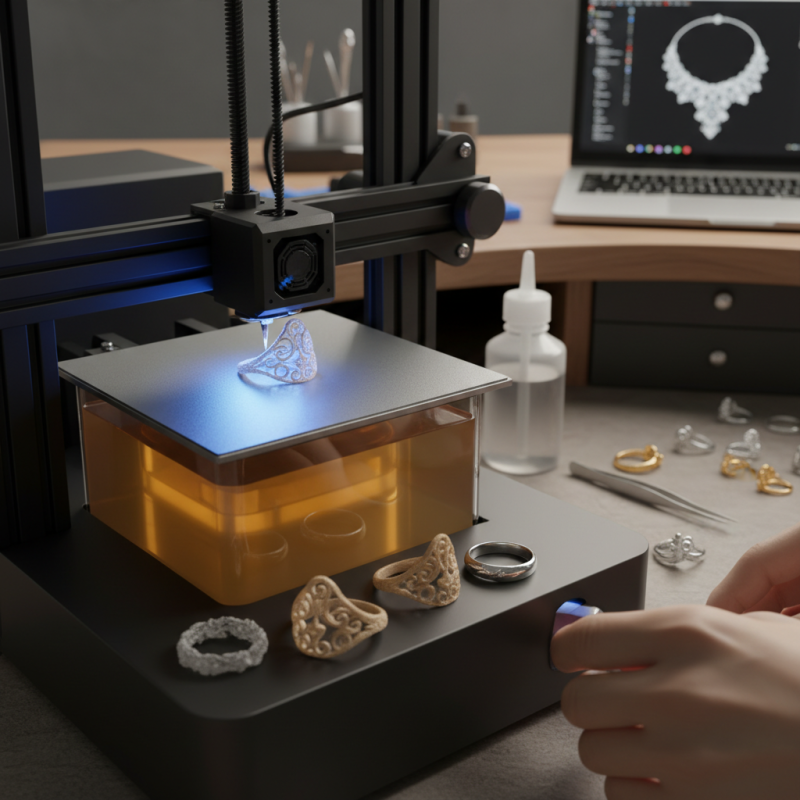
What is Castable Resin for Jewelry Printing?
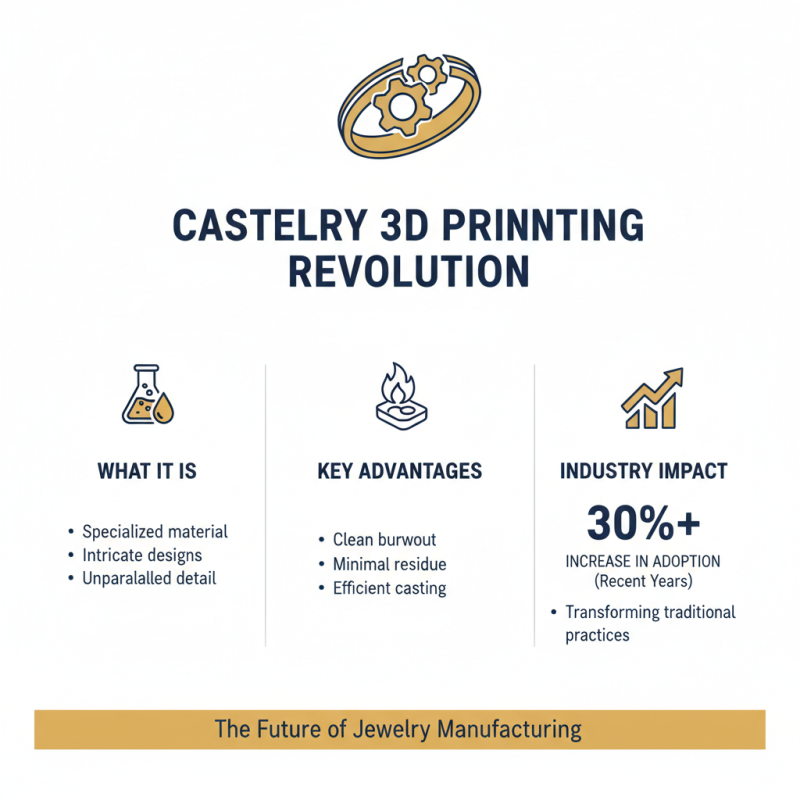
Castable resin is a specialized material designed for jewelry 3D printing. It allows jewelers to create intricate designs with unparalleled detail. This resin effectively burns out cleanly during the casting process, leaving minimal residue behind. According to industry reports, the adoption of 3D printing in jewelry has increased by over 30% in recent years. This shift is transforming traditional jewelry-making practices.
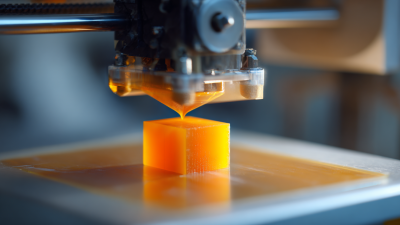
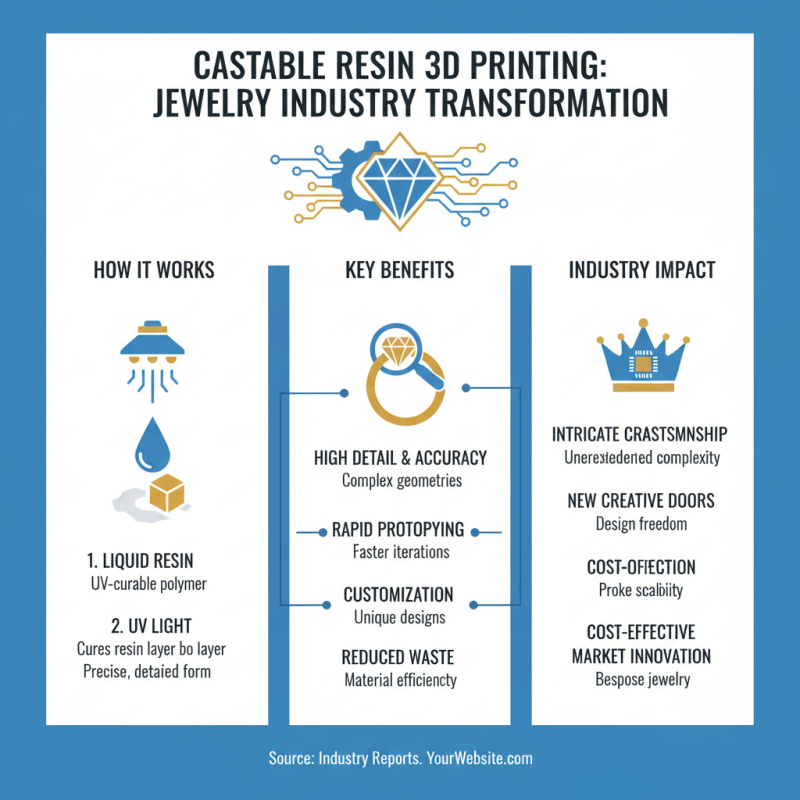
When using castable resin, the printer utilizes UV light to cure the resin layer by layer. This results in high-resolution patterns that are perfect for molds. Jewelers can produce unique pieces quickly. However, achieving the ideal settings for different design intricacies can take time. It requires experimentation to find the right exposure time and temperature settings.
**Tip:** Start with a small batch of designs to test various parameters. This way, you refine settings without risking larger quantities of resin. Remember, even minor changes can yield vastly different outcomes.
Despite its advantages, castable resin can be challenging to work with. It can be brittle and may not withstand external stresses as well as traditional materials. Jewelers should always evaluate the final product's durability. **Tip:** Consider running stress tests on your castings to analyze their reliability. Balancing detail and strength is crucial in jewelry making.
How Castable Resin 3D Printers Operate
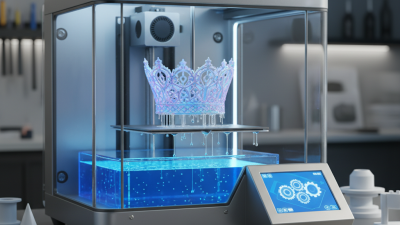
Castable resin 3D printers have transformed jewelry making. They work by using light to cure liquid resin into solid forms. The process involves projecting a pattern of light, layer by layer, into a vat of resin. As each layer cures, it creates intricate details. This method allows for high precision and complex geometries that traditional casting cannot achieve.
Reports indicate that the global 3D printing market for jewelry is expected to grow by 23.4% annually. This growth is driven by the demand for customized designs. Yet, there are challenges. The resin itself can be prone to warping and does not always yield flawless results. Even experienced jewelers find that adjustments are often needed post-printing. It is essential to balance speed with quality to maintain customer satisfaction.
One area that requires reflection is the post-processing phase. Removing support structures and ensuring a smooth finish can be labor-intensive. Many designers struggle with finding the right post-cure techniques. This stage can make or break the final piece. Research shows that approximately 30% of printed items face issues during this refinement process. Addressing these challenges is key for the future of castable resin in the jewelry industry.
Advantages of Using Castable Resin in Jewelry Making
Castable resin 3D printers are revolutionizing the jewelry industry. They provide increased precision and detail unmatched by traditional methods. According to industry data, the market for 3D printing in jewelry is expected to reach $1.2 billion by 2027. Many jewelers are adopting this technology to streamline production while enhancing creativity.
One significant advantage of castable resin is its ability to produce highly intricate designs. This material allows for detailed features like filigree and elaborate shapes. Reports indicate that jewelers using castable resin can reduce production time by up to 50%. However, achieving a flawless print can be challenging, requiring careful calibration and understanding of the printing process. Many printers do not perform well with complex geometries.
Another benefit lies in the material’s clean burnout properties. Castable resins ensure that models can be transformed into high-quality metal casts without residue. This property is essential for creating castings with fewer defects. Yet, the need for post-processing can be a drawback. Jewelers must still dedicate time to cleaning and finishing pieces. Adjustments during this phase can lead to inconsistencies, challenging the reliability of each print. Balancing efficiency with quality remains a key concern for many in the industry.
Common Applications of Castable Resin 3D Printing in the Jewelry Industry
The jewelry industry has seen a significant increase in the use of castable resin 3D printing. According to recent reports, the global 3D printing market for jewelry is expected to reach nearly $6 billion by 2025. This growth is attributed to the precision and speed that castable resin printers offer. Jewelers can create intricate designs that were once challenging. This technology allows for the production of highly detailed patterns and molds.
Common applications include creating master patterns for investment casting. Jewelers can produce unique pieces in a fraction of the time. One report indicated that 75% of jewelers believe 3D printing improves their productivity. The ability to print complex geometries enhances creativity. However, not all designs translate seamlessly into 3D models. Iteration is often necessary to achieve optimal results. Mistakes in color choices or design flaws can surface, prompting revision.
Another application is custom jewelry production. Clients appreciate the ability to co-create one-of-a-kind pieces. Feedback loops between clients and jewelers can be slow. Even minor design changes can require numerous adjustments. Balancing detail with feasibility remains a challenge. As technology progresses, jewelers will need to adapt continually.
What is a Castable Resin 3D Printer for Jewelry and How Does It Work? - Common Applications of Castable Resin 3D Printing in the Jewelry Industry
| Application Area |
Description |
Benefits |
Common Materials |
| Ring Design |
Creating intricate and personalized ring designs. |
High precision and customization options. |
Castable resin for fine details. |
| Pendant Making |
Designing and producing unique pendants. |
Rapid prototyping allows for quick iterations. |
High-detail castable resins. |
| Earring Production |
Crafting detailed and lightweight earring designs. |
Enhanced creativity with complex shapes. |
Fast-curing castable materials. |
| Bracelet Creation |
Producing customized and intricate bracelets. |
Cost-effective for small batch production. |
Flexible and castable resins. |
| Prototype Development |
Creating functional prototypes of jewelry pieces. |
Streamlined design validation process. |
Common castable resins used. |